

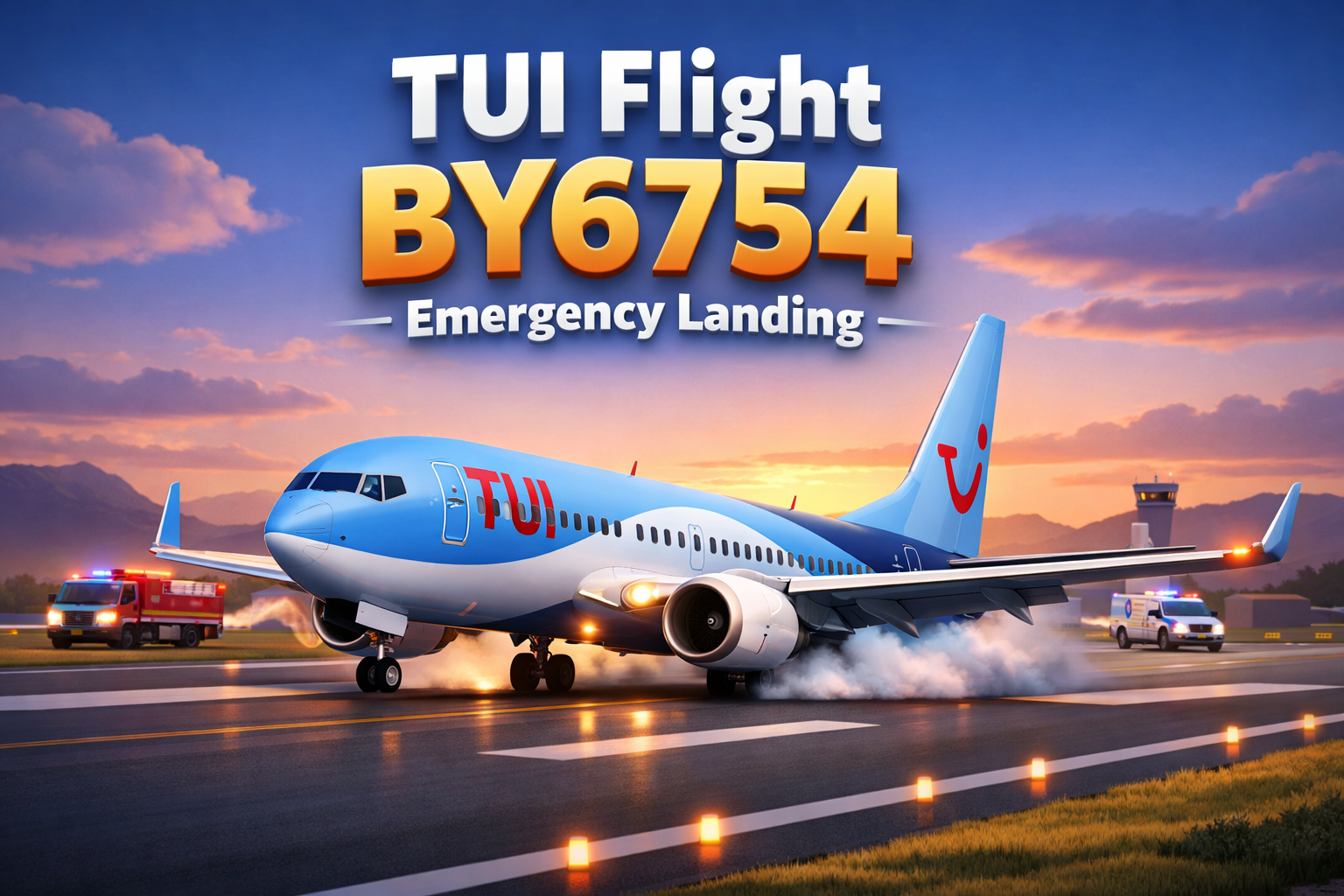
The tui flight by6754 emergency landing has drawn significant attention from travelers and aviation observers alike. Incidents like these naturally raise concerns about passenger safety, airline protocols, and what truly happens when a flight must land unexpectedly. While emergency landings may sound alarming, they are often controlled procedures carried out with precision and training.
In this article, we break down the tui flight by6754 emergency landing in a clear, factual, and easy-to-understand way. You’ll learn what led to the situation, how the crew handled it, and what it means for passengers flying today. This guide is designed to answer real questions and provide trustworthy insights without unnecessary technical jargon.
What Happened During the TUI Flight BY6754 Emergency Landing
The tui flight by6754 emergency landing occurred when the aircraft experienced an issue mid-flight that required immediate attention. While airlines do not always disclose every technical detail publicly, such situations typically involve mechanical warnings, system irregularities, or precautionary safety checks. The flight crew made the decision to divert and land at the nearest suitable airport to ensure passenger safety.
Importantly, emergency landings are not always the result of a dangerous failure. In many cases, they are precautionary measures taken early to prevent escalation. The pilots follow strict aviation protocols, and air traffic control provides full support to guide the aircraft safely. Passengers onboard may feel concerned, but these procedures are designed to minimize risk and maintain control throughout the situation.
The aircraft involved was operated by TUI Airways, a well-established airline known for following international aviation safety standards. The incident highlights how airlines prioritize safety above all else, even if it causes delays or inconvenience. Read More : Atlanta Falcons vs New Orleans Saints Match Player Stats
Why Emergency Landings Like BY6754 Happen
Understanding the reasons behind the tui flight by6754 emergency landing helps remove unnecessary fear. Emergency landings can occur for a variety of reasons, and not all are life-threatening. Some of the most common causes include technical alerts, unusual readings in the cockpit, or minor system malfunctions that require inspection on the ground.
Aircraft are highly advanced machines, and even a small sensor warning can trigger precautionary action. Pilots are trained to treat every alert seriously, which is why flights may land early even if the issue turns out to be minor. This proactive approach is a key part of modern aviation safety.
In many cases, planes like the Boeing 737 or similar aircraft used by TUI are equipped with multiple backup systems. These redundancies ensure that even if one component shows an issue, the aircraft can still operate safely while landing as soon as possible.
How the Crew Handled the Situation
The professionalism of the flight crew plays a major role in events like the tui flight by6754 emergency landing. Pilots undergo extensive training for emergency scenarios, including simulations that prepare them for real-life situations. Their response is calm, calculated, and based on well-practiced procedures.
During such incidents, the cockpit crew communicates with air traffic control to coordinate the safest route to landing. Meanwhile, the cabin crew ensures that passengers remain calm, informed, and prepared for landing. Instructions such as fastening seatbelts and adopting safety positions are given clearly to reduce risk.
Passengers often report that despite initial concern, the situation feels controlled due to the crew’s confidence and communication. This reflects the high standards maintained in commercial aviation, where safety drills and protocols are regularly updated and practiced.
Passenger Experience and Safety Measures
For passengers, the tui flight by6754 emergency landing may have been an unexpected and stressful experience. However, modern aircraft are designed to handle such situations smoothly. Emergency landings are usually controlled descents rather than abrupt or dangerous maneuvers.
Cabin crew play a critical role in maintaining order and reassurance. They guide passengers step-by-step, ensuring everyone understands what to do. Safety equipment onboard, including oxygen masks and emergency exits, is always ready for use, though in many cases they are not needed.
Passengers are also protected by strict international safety regulations. Aviation authorities require airlines to meet rigorous standards, which means that even emergency scenarios are planned for in advance. This level of preparedness is why the vast majority of emergency landings result in safe outcomes.
What Happens After an Emergency Landing
After the tui flight by6754 emergency landing, the process does not end once the aircraft touches the ground. Ground crews and engineers immediately inspect the aircraft to identify the cause of the issue. This ensures that the aircraft is safe before it returns to service.
Passengers are usually assisted with onward travel arrangements, whether through replacement flights or accommodations. Airlines like TUI Group have dedicated support teams to manage such situations efficiently and minimize disruption.
Authorities may also conduct a review of the incident to confirm that all safety procedures were followed correctly. These reviews are standard and help improve aviation safety further. Each incident becomes a learning opportunity for the entire industry.
Is It Safe to Fly After Incidents Like BY6754?
The tui flight by6754 emergency landing may raise concerns about flying, especially for nervous travelers. However, it’s important to understand that aviation remains one of the safest modes of transportation in the world. Incidents like these actually demonstrate how effective safety systems are.
Airlines and regulators continuously monitor and improve safety measures. Every emergency landing is carefully analyzed, and improvements are made if needed. This ongoing process ensures that flying becomes even safer over time.
For travelers, this means that while such events may sound alarming, they are part of a system designed to protect passengers at all times. The fact that the aircraft landed safely is proof that the safety protocols worked exactly as intended.
Lessons Learned from the TUI Flight BY6754 Emergency Landing
One of the key takeaways from the tui flight by6754 emergency landing is the importance of preparedness. From pilots to ground staff, every part of the aviation system is designed to respond quickly and effectively to unexpected situations.
This incident also highlights the role of technology in modern aviation. Advanced monitoring systems detect issues early, allowing crews to act before problems escalate. Combined with rigorous training, this creates a strong safety net for passengers.
For travelers, the lesson is simple: trust the process. Emergency landings are not signs of failure but examples of safety in action. Airlines prioritize passenger well-being, even if it means making difficult decisions like diverting a flight.
FAQ Section
1. What caused the TUI flight BY6754 emergency landing?
The exact cause may not always be publicly detailed, but it was likely due to a technical alert or precautionary issue that required safe landing for inspection.
2. Were passengers safe during the incident?
Yes, emergency landings are carefully managed procedures, and passengers are typically kept safe throughout the process.
3. Is an emergency landing dangerous?
Not necessarily. Most emergency landings are precautionary and conducted under controlled conditions with trained professionals.
4. Do pilots train for situations like this?
Absolutely. Pilots undergo rigorous training and simulations to handle emergency scenarios effectively and calmly.
5. Can this happen on any flight?
While rare, emergency landings can happen on any flight as a safety precaution, but modern aviation systems make them highly controlled and safe.
Conclusion
The tui flight by6754 emergency landing is a clear example of how aviation safety systems work in real-world situations. While such events may seem alarming, they are often precautionary actions taken to protect passengers and crew. From advanced aircraft technology to highly trained professionals, every layer of aviation is built around safety.
For travelers, understanding these processes can reduce fear and build confidence in flying. If you want to learn more about airline safety or flight procedures, consider exploring related guides on aviation safety protocols or how emergency landings work.